Featured

More Droughts and Heatwaves

More Droughts and Heatwaves

The above image was retrieved from:
Centers for Disease Control and Prevention. (2019, July 29). Drought and Your Health. Retrieved from https://www.cdc.gov/features/drought/index.html.

More droughts and heatwaves by Janvi

Global climate change has many harmful effects on the environment of our planet. By human activities many gases are produced in the environment that will directly affect the temperature of the earth, many scientists have proved that it will continue rice the temperature in upcoming decades. “According to the IPCC, the extent of climate change effects on individual regions will vary over time and with the ability of different societal and environmental systems to mitigate or adapt to change” (IPCC,2007). According to NASA research, we found many reasons that affect the earth’s climate. There are many reasons which affect the climate of the world, one of them is human activities. There are 95 percent probability that human activities over the past 50 years have warmed the earth (Jackson R., 2019). Another reason that provides by NASA is – energy power of the sun, the sun is the major source of energy and its important for earth. As observe we can see that energy coming from the sun is increased in the past few years.

When we talk about the drought, the first thing comes in mind is the dry and cracked surface of the earth. If we relate drought and climate, it is important to make a difference in weather and climate. Farmers are most concerned about the agriculture drought when available water supplies are not provided to them, but now the situation is quite different. If we consider Indian climate, in India monsoon season starts in June and ends in September, compared to the past few years its been 30 percent less rain in the normal month of June. So, we can imagine the situation throughout the year how they suffer this situation.

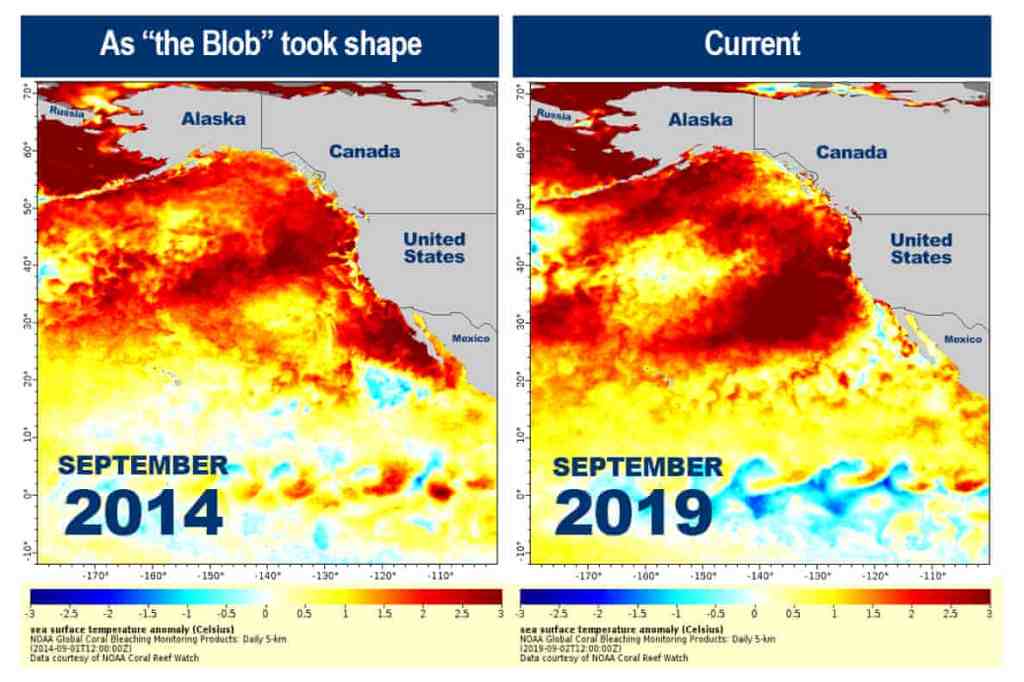
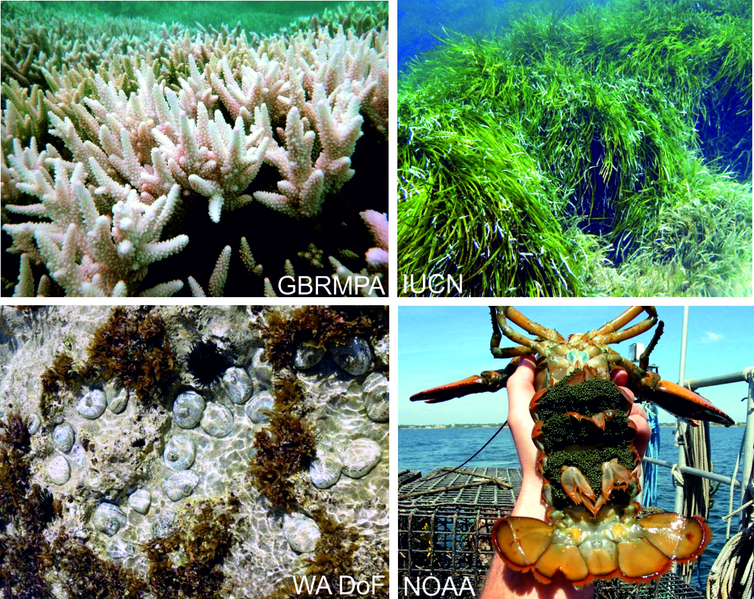
The temperature of the oceans is going higher and higher by the time. In the past 30 years marine heatwave days have increased by just over 54%, a trend the study found consistency with declines in ocean life. Since the 1980s, the changing climate conditions have driven an uptick in the disaster risk in the region, the report says, which will ramp up in the future. When ocean temperature extremely warm for an extended period, that consequence in the ecosystem and industries. Heatwaves not only affect the environment, but it also has a significant effect on the human body, when a wave of heat occurs and the body is not ready to accept the heat, such as the beginning of the season of a sudden change in the temperature after cool season. People suffering from chronic illness and several mental problems.” Heatstroke is the most serious effect of heat. It can occur suddenly and quickly lead to death if not treated” (The Effects of Heat, n.d.). Even minor changes in seasonal normal temperature relate to raised illness and death. Heat exhaustion is a major problem caused by the loss of water in the body and sault through the heat effect of sweating. Vomiting, weakness heavy sweating are the symptoms of heat exhaustion.
References

IPCC 2007, Summary for Policymakers, in Climate Change 2007: Impacts, Adaptation and Vulnerability. Contribution of Working Group II to the Fourth Assessment Report of the Intergovernmental Panel on Climate Change, Cambridge University Press, Cambridge, UK, p. 17.

Jackson, R. (2019). The Effects of Climate Change. [online] Climate Change: Vital Signs of the Planet. Available at: https://climate.nasa.gov/effects/

The Effects of heat.(n.d.)Retrieved from https://www.quebec.ca/en/health/advice-and-prevention/health-an /the-effects-of-oppressive-and-extreme-heat/
Featured

Rise in Sea Level

Rise in Sea Level

The above image is retrieved from:
US Global Change Research Program. (n.d.). Sea Level Rise. Retrieved November 20, 2019, from https://www.globalchange.gov/browse/indicators/global-sea-level-rise.

Canada “comes out very well”

— Benjamin Strauss .

Sea Level will Continue to Rise by Kevin

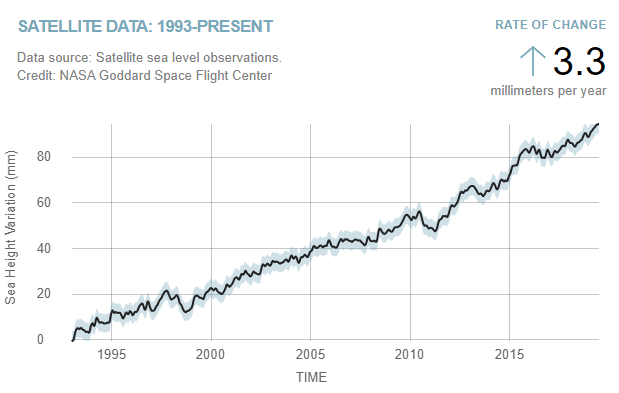
What people originally know, that an increasing steady rise in global sea level has occurred and continue to occur, has changed. Global sea level rise is accelerating, particularly in the last decades.  It is expected the sea level will rise about an extra 2 feet (26 inches or 65 centimeters) by the year 2100 (Weeman, 2018). Take a look at the satellite sea level observations image below.

The image above is a graph that shows the satellite sea level observation changes since 1993 (NASA, 2019).

There are two main factors attributing to the rise in global see levels, increasing temperature of water and increase in land ice melting. As the Earth continues to increase in temperature, the temperature of the air and water also increases.  This causes the water to be warmer. Warm water will expand, sea level rises. With the increase in Earth’s temperature, land ice is melting and flow into the ocean.  Two places in particular are the land ice in Greenland and Antarctica (Weeman, 2018).

Such a rise in global sea level is very worrying as it can cause significant issues for coastal cities (Weeman, 2018). It is not just coastal cities that are negatively affected. Rising sea levels can also contaminate our freshwater sources, underground or on the surface, with sea water, cause erosion of soil, and affect all the infrastructure such as roads, water treatment, and transit systems. The side effects could lead to massive negative social and economic impact. By 2050, a minimum of 570 cities and a potential 800 million of its people could be exposed to rising sea level, storm surges, and floods. We are already seeing the effects of chronic flooding today. Venice was recently in the news for their floods. More than 90 US cities see chronic flooding and is expected to double by 2030 (Muggah, 2019). Some may think that is just 90 cities, but one needs to keep in mind that 40% of US citizens lives on the coast. That is about 130 million people that could be affected by rising sea levels (US Department of Commerce, 2008). Take a look at the Youtube video to learn more about sea level rise in other cities (Verge Science, 2019).

Canadian Connection

Canada is bordered by the Pacific Ocean in the West and the Atlantic Ocean in the East. So, what does a rise in sea level means for Canada. A report commissioned by the Environment and Climate Change Department shows that sea level could rising between one millimetre and 4.5 millimetre. See the image below for a look at how much sea level rise could Canada’s coast get by the end of the century (Hennig, 2019).

The Image above depicts the potential sea level rise by the end of the century (Hennig, 2019).

Overall, Canada “comes out very well” as it is still dealing with the effects of the last Ice Age. Many of the land is actually rising, keeping pace with rising sea level. Of course, there are areas in Canada that will see the effects of the rise in sea level, but it is mainly the coastal cities. Even places like Attawapiskat, that borders the Hudson Bay, is affected. There is currently 840,000 Canadians who live on land that can see annual flooding. Despite the good news for most of Canada, the benefit of reducing the country’s emission is much better than to not do anything (Shah, 2019).

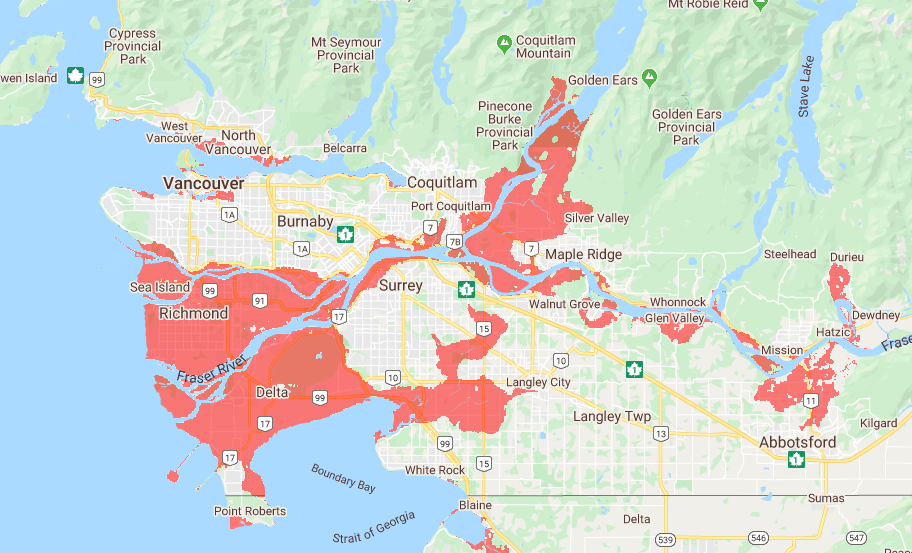
Take a look at this map to see areas that could be affected by the rise in sea level. Below is an image of Vancouver and the red highlights areas that may be affect by rise in sea level (Climate Central, n.d.).

The image above shows the potential areas in Vancouver and the BC lower mainland, in red, that may be affect by rising sea levels (Climate Central, n.d.).

References

Climate Central. (n.d.). A Global Screening Tool by Climate Central. Retrieved November 16, 2019, from https://coastal.climatecentral.org/map/10/-122.6231/49.2398/?theme=sea_level_rise&map_type=coastal_dem_comparison&elevation_model=coastal_dem&forecast_year=2050&pathway=rcp45&percentile=p50&return_level=return_level_1&slr_model=kopp_2014.

Hennig, C. (2019, April 3). Canada’s sea levels are rising – and that’s got British Columbians in coastal cities concerned | CBC News. Retrieved November 16, 2019, from https://www.cbc.ca/news/canada/british-columbia/climate-change-report-bc-coastal-cities-1.5083449.

Muggah, R., & SecDev Group. (2019, January 16). The world’s coastal cities are going under. Here’s how some are fighting back. Retrieved November 16, 2019, from https://www.weforum.org/agenda/2019/01/the-world-s-coastal-cities-are-going-under-here-is-how-some-are-fighting-back/.

NASA. (2019, June 28). Sea Level. Retrieved November 16, 2019, from https://climate.nasa.gov/vital-signs/sea-level/.

Shah, M. (2019, October 30). 300 million people currently live in areas threatened by rising sea levels, study finds. Retrieved November 16, 2019, from https://globalnews.ca/news/6099866/rising-sea-levels-300-million-people/.

US Department of Commerce, & National Oceanic and Atmospheric Administration. (2008, October 27). Is sea level rising? Retrieved November 16, 2019, from https://oceanservice.noaa.gov/facts/sealevel.html.

Verge Science. (2019, April 23). This is what sea level rise will do to coastal cities. Retrieved November 16, 2019, from https://www.youtube.com/watch?v=6tesHVSZJOg.

Weeman, K. (2018, June 13). New study finds sea level rise accelerating – Climate Change: Vital Signs of the Planet. Retrieved November 16, 2019, from https://climate.nasa.gov/news/2680/new-study-finds-sea-level-rise-accelerating/.

Temperatures Will Rise

Temperatures Will Rise

The above image was retrieved from:
Nikolewski, R. (2019, October 25). California regulators approve funding for controversial wildfire law. Retrieved from https://www.sandiegouniontribune.com/business/energy-green/story/2019-10-24/california-regulators-approve-funding-for-controversial-wildfire-law.

Temperatures Will Continue to Rise by Jyot

Climate change has many effects on the earth such as ice on rivers have been breaking up or melting up, glaciers have shrunk, droughts and heat waves.

Temperature continues to rise is one of the effects of climate change. The average temperature of the Earth is rising at nearly twice the rate it was 50 years ago (Susan Callary). Increase in green house gases such as carbon dioxide, methane, nitrous oxide causes the increase in temperature. As per scientists, the temperature of the earth will be rising more and more day by day due to the green house gases produced by human beings (Susan Callary,2019). The Intergovernmental Panel on Climate Change (IPCC), which includes more than 1,300 scientists from the United States and other countries, forecasts a temperature rise of 2.5 to 10 degrees Fahrenheit over the next century(Susan Callary, 2019). This can vary from time to time.

How does the gases effect the temperature of the earth:

The Earth’s atmosphere contains more green house gas molecules, the infrared energy emitted by the surface will be absorbed by the atmosphere. Some of the energy from a warmer atmosphere radiates back down to earth’s surface. Thus, the temperature of the earth’s surface rises.(Robert Levy,2010)

Effects of rising temperatures:

The above image was retrieved from:
Hanna, L. (2019, November 5). How rising temperatures affect our health. Retrieved from http://theconversation.com/how-rising-temperatures-affect-our-health-123016.

Humans:

The risk to public health increases when high temperature mix with other weather conditions to cause what is known as ‘excessive heat event’.(Public Health, 2019)

High temperature can cause serious illness such as heat cramps, heat stroke, or even death.

Heat stroke: Heat stroke can be explained as excessive sweating and rapid heartbeat. Due to heat stroke, an individual can also get unconscious. Heat stroke can also affect heart, brain, kidney and muscles.(Public Health,2019)

Cardiovascular disease: Extreme heat can cause cardiovascular disease such as strokes and dysrhythmia. As per reports in United states, strokes are listed as the country’s third leading cause of death.(Public Health,2019)

Kidney disease: A very long exposure in heat can cause kidney disease such as rhabdomyolysis. Rhabdomyolysis is caused by damaged tissues which causes long term renel disease. (Public Health, 2019)

As per a report “Killer summer heat” discusses a heat wave that struck California in 2006. In just two weeks 655 people lost their lives and more than 16,000 individuals went to emergency rooms to see a doctor.(Public Health,2019)

Animals:

The above image was retrieved from:
World Wildlife Fund. (n.d.). Threats_section_image_(c)_www.JSGrove.com_WWF.jpg. Retrieved from https://www.worldwildlife.org/photos/polar-bear–15.

Not only on humans but animals and plants and our ecosystem also does get affected by rising temperature:

If the temperature rises the plants and animals that needs to live in a cold place cannot find a suitable place to live and it might effect the species to an extinction.(Jyot,2019)*
*(Jyot, 2019) as it is a concluding sentence.

Forests:

The above image was retrieved from:
Sandy, M. (2019, September 1). See Photos of the Amazon Rainforest Fires in Brazil. Retrieved from https://time.com/longform/amazon-rainforest-fires-photos/.

In forests, excessive heat can lead to wildfires in forests damaging the greenery in the forest as well as endangering the species and animals living in forests. (Jyot,2019)

References

Callary, S. (2019, September 30). The Effects of Climate Change. Retrieved from https://climate.nasa.gov/effects/.

Public Health. (2019, November 19). Climate Change – Rising Temperature. Retrieved from https://www.publichealth.org/public-awareness/climate-change/.

Levy, R. (2010, June 3). Global Warming. Retrieved from https://earthobservatory.nasa.gov/features/GlobalWarming/page2.php.

Sandy, M. (2019, September 1). See Photos of the Amazon Rainforest Fires in Brazil. Retrieved from https://time.com/longform/amazon-rainforest-fires-photos/.

World Wildlife Fund. (n.d.). Threats_section_image_(c)_www.JSGrove.com_WWF.jpg. Retrieved from https://www.worldwildlife.org/photos/polar-bear–15.

Hanna, L. (2019, November 5). How rising temperatures affect our health. Retrieved from http://theconversation.com/how-rising-temperatures-affect-our-health-123016.

Design a site like this with WordPress.com
Get started